
$300.00
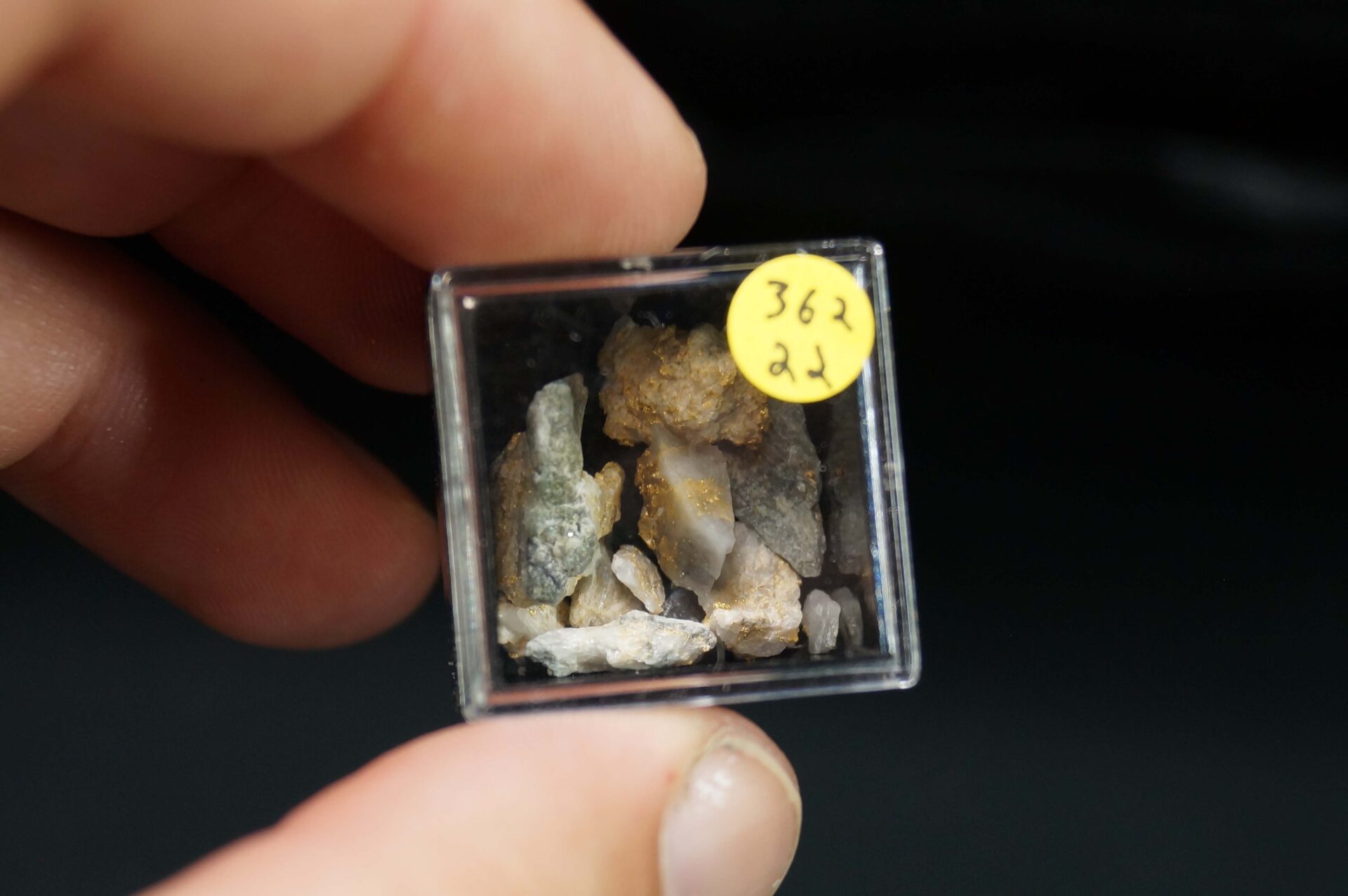
A classic Canadian gold specimen from the historic Kirkland Lake Gold Camp in Ontario, featuring bright metallic native gold in quartz and altered host rock. The gold occurs as visible leaves, flakes, seams and irregular masses, commonly concentrated along fractures and contacts within the quartz-rich matrix. Dark grey to green altered wall rock is characteristic of many specimens from the camp, bits of pyrite and other sulphides may also be present.
The Kirkland Lake camp is one of Canada's great historic gold districts and includes the celebrated “Mile of Gold,” a remarkably productive belt that supported a succession of major underground mines during the 20th century. The deposits occur within Archean rocks of the Abitibi greenstone belt and are associated with structurally controlled quartz-carbonate vein systems carrying high-grade native gold and sulphide mineralization.
Although the Kirkland Lake district produced many millions of ounces of gold, the overwhelming majority of its mineralized material was crushed and processed for its precious-metal content. Specimens preserving readily visible native gold therefore provide an attractive mineralogical record of one of Canada's most important historic gold camps.
Be the first to know: latest additions, featured minerals, events, and exclusive updates await you.
Subscribe Now!
Website design by Melanie Lane.
Development and maintenance by Wenex Media Works.